
The Ultimate Guide to Rotary Screw Air Compressors
Industrial operations demand reliable, continuous power, and few machines deliver that power as effectively as a rotary screw air compressor. Unlike the intermittent pulses of piston compressors, these workhorses provide a steady stream of compressed air that keeps assembly lines moving, tools operating, and businesses profitable. If you are looking to upgrade your facility’s air system, understanding the mechanics and benefits of screw compressors is the first step toward optimizing your efficiency.
What Is a Rotary Screw Air Compressor?
A rotary screw air compressor is a type of positive displacement compressor that uses a rotary-type mechanism. They are the most common source of compressed air for industrial applications. The core function of this machine relies on two meshing helical screws, known as rotors, within a casing. As these rotors turn, they trap air in the pockets between the screws. The volume of these pockets decreases as the air moves down the length of the rotors, compressing the air before discharging it. This continuous process allows the machine to run at 100% duty cycle, meaning it can operate all day without needing cool-down periods. There are two primary types of screw compressors:
- Oil-Injected: Oil is injected into the compression chamber to lubricate the moving parts, seal the gaps, and dissipate heat. This is the most common type for general industrial use.
- Oil-Free: These compressors use timing gears to keep the rotors from touching, eliminating the need for oil in the compression chamber. These are essential for sensitive industries like food processing, pharmaceuticals, and electronics, where air purity is critical.
Key Benefits of Choosing a Screw Compressor
When comparing different air compression technologies, rotary screw models offer distinct advantages for medium to large-scale operations.
Continuous Operation
The most significant advantage is the ability to run continuously. Piston compressors generate significant heat and require “downtime” to cool off. A rotary screw air compressor is designed to run 24/7, making it ideal for factories and workshops that cannot afford interruptions.
Energy Efficiency
Modern screw compressors are designed for efficiency. Many units feature variable speed drives (VSD) that adjust the motor speed to match the air demand. This prevents the machine from running at full power when demand is low, leading to substantial energy savings over time.
Quiet Operation
Because the internal components move in a smooth, sweeping motion rather than the violent back-and-forth of a piston, these compressors are much quieter. This often eliminates the need for a separate compressor room, allowing the unit to be installed closer to the point of use.
Durability and Reliability
With fewer moving parts than reciprocating models, there is less wear and tear. The internal rotors do not touch (thanks to oil or timing gears), which means performance degradation is minimal over the lifespan of the unit.
How a Rotary Screw Air Compressor Works
Understanding the mechanics behind the machine can help you appreciate why it is such a popular choice for industrial applications.
- Air Intake: Ambient air is drawn in through an inlet filter, which removes dust and debris.
- Compression: The air enters the compression element, where the male and female rotors trap the air. As the rotors spin, the space between them gets smaller, squeezing the air.
- Cooling and Separation: In oil-injected models, the compressed air is mixed with oil. This mixture goes to a separator tank where the oil is removed from the air. The oil is cooled and recycled, while the air moves to an aftercooler to lower its temperature.
- Discharge: The clean, compressed air exits the system, ready for use in pneumatic tools and machinery.
Applications for Screw Compressors
The versatility of the screw compressor makes it suitable for a wide range of industries.
- Manufacturing: Powering pneumatic tools, clamping devices, and automated assembly lines.
- Automotive: Running paint sprayers, impact wrenches, and tire inflation equipment in body shops and repair centers.
- Food and Beverage: Providing clean air for packaging, bottling, and processing (typically requiring oil-free models).
- Construction: Operating heavy-duty drills, hammers, and compactors on job sites.
- Pharmaceuticals: Ensuring sterile environments for drug production and packaging.
Maintenance and Longevity
To ensure your rotary screw air compressor lasts for decades, regular maintenance is non-negotiable. While these machines are built for durability, neglecting routine care can lead to efficiency losses and mechanical failure.
Routine Checks
- Oil Levels: Check daily to ensure proper lubrication.
- Air Filters: Inspect weekly and replace as needed to prevent contaminants from entering the system.
- Oil Filters: Replace according to the manufacturer’s schedule to keep the lubricant clean.
- Belts and Couplings: Check for wear and tension issues.
Professional Service
Partnering with D & D Compressors Inc. professional service provider for annual inspections ensures that components like the air/oil separator and cooler are functioning correctly. Regular analysis can identify potential issues before they cause downtime.
Choosing the Right Compressor for Your Needs
Selecting the correct air compressor involves more than just picking a brand. You must consider several factors to ensure the unit meets your operational demands.
- CFM (Cubic Feet per Minute): This measures the volume of air the compressor delivers. You need a unit that provides enough CFM to run all your tools simultaneously.
- PSI (Pounds per Square Inch): This measures the pressure. Most industrial tools require 90 to 100 PSI.
- Horsepower (HP): While important, HP is less critical than CFM and PSI. Focus on the air delivery specs first.
- Voltage: Ensure your facility has the correct electrical infrastructure (e.g., single-phase vs. three-phase power).
Investing in a rotary screw air compressor is an investment in the productivity of your business. By providing a reliable, efficient, and continuous supply of compressed air, these machines serve as the heartbeat of modern industry. Contact us to learn more!
Showing 1–12 of 160 results
-
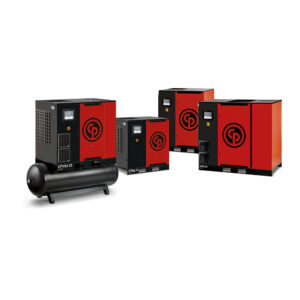
CPBg 20 BM
$0.00 Request a quoteWeight 904 lbs Dimensions 47.2 × 32.9 × 48 in Horsepower Gear Drive
Voltage Tri-Voltage
Configuration Base Mount
-
CPBg 20 BM
$0.00 Request a quoteWeight 904 lbs Dimensions 47.2 × 32.9 × 48 in Horsepower Gear Drive
Voltage Tri-Voltage
Configuration Base Mount
-
CPBg 20 TM
$0.00 Request a quoteWeight 1400 lbs Dimensions 76.4 × 32.9 × 72.2 in Horsepower Gear Drive
Voltage Tri-Voltage
Configuration Tank Mount
-
CPBg 20 TM
$0.00 Request a quoteWeight 1400 lbs Dimensions 76.4 × 32.9 × 72.2 in Horsepower Gear Drive
Voltage Tri-Voltage
Configuration Base Mount with Integrated Dryer
-
CPBg 20D BM
$0.00 Request a quoteWeight 1058 lbs Dimensions 53.1 × 32.9 × 48 in Horsepower Gear Drive
Voltage Tri-Voltage
Configuration Base Mount with Integrated Dryer
-
CPBg 20D BM
$0.00 Request a quoteWeight 1058 lbs Dimensions 53.1 × 32.9 × 48 in Horsepower Gear Drive
Voltage Tri-Voltage
Configuration Base Mount with Integrated Dryer
-
CPBg 20D TM
$0.00 Request a quoteWeight 1510 lbs Dimensions 76.4 × 32.9 × 72.2 in Horsepower Gear Drive
Voltage Tri-Voltage
Configuration Tank Mount with Integrated Dryer
-
CPBg 20D TM
$0.00 Request a quoteWeight 1510 lbs Dimensions 76.4 × 32.9 × 72.2 in Horsepower Gear Drive
Voltage Tri-Voltage
Configuration Tank Mount with Integrated Dryer
-
CPBg 25 BM
$0.00 Request a quoteWeight 959 lbs Dimensions 47.2 × 32.9 × 48 in Horsepower Gear Drive
Voltage Tri-Voltage
Configuration Base Mount
-
CPBg 25 BM
$0.00 Request a quoteWeight 959 lbs Dimensions 47.2 × 32.9 × 48 in Horsepower Gear Drive
Voltage Tri-Voltage
Configuration Base Mount
-
CPBg 25 TM
$0.00 Request a quoteWeight 1455 lbs Dimensions 76.4 × 32.9 × 72.2 in Horsepower Gear Drive
Voltage Tri-Voltage
Configuration Tank Mount
-
CPBg 25 TM
$0.00 Request a quoteWeight 1455 lbs Dimensions 76.4 × 32.9 × 72.2 in Horsepower Gear Drive
Voltage Tri-Voltage
Configuration Tank Mount